Posts

Showing posts with the label 70s

Le Charme Discret de la Bourgeoisie (1972)

Image
Sociology is a subject that has always fascinated me, and, had I not been bitten by the Legend of Zelda bug as a child, I would certainly be in that line of work today. I often read about the topic, however, which, other than leading to bizarre conversations with friends deep into the night over a bottle of wine, has the side effect of triggering epiphanies for me in the most unexpected of places. For instance, a couple of months ago, my wife and I went for lunch to a small ramen shop near where we live, being sat next to a young married couple and their 5- or 6-years-old son, whom, we'd overheard, they had brought along for his first "official" taste of the dish. As we ate, we couldn't help paying attention to a particular advice they gave him about how to properly enjoy his food: "You must always make noise while slurping ramen," they said, "because the louder you are, the tastier it will be, and the happier the cook will become". My wif...
Gates of Heaven (1978)

Image
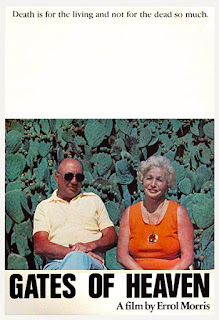
Last December, while aimlessly browsing the Internet, I happened to stumble upon an article published by Ebert in 1991 - that is, five years before starting his Great Movies collection - in which he listed his personal ten best movies of all time, comprised of films that had "moved [him] deeply in one way or another". Despite being the first time I had ever laid eyes on that article, based on what I knew about Ebert I was pretty sure of what to expect. I knew Michael Curtiz 's  Casablanca  (1942) would be in there - as it was the movie with which he had started his Great Movies compilation -, together with  Orson Welles 's  Citizen Kane  (1941) - generally regarded as " the " best movie of all time (at least by then ). I was sure that a movie by  Yasujiro Ozu  (one of Ebert's  favorite   directors   ever ), as well as one by  Martin Scorsese  (about whom Ebert even wrote a book ), had been selected as well, and I had ...

Barry Lyndon (1975)

Image
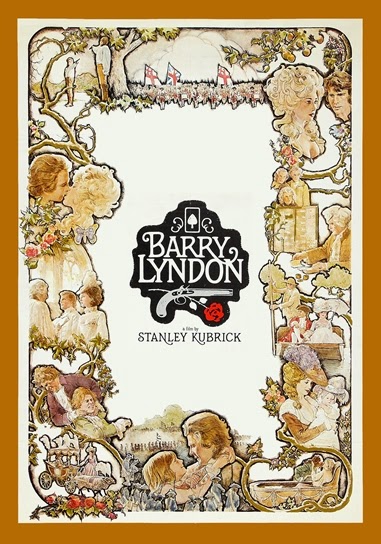
It is no secret that, by the second half of the 1960s, director  Stanley Kubrick  took a deep interest in making a biography of  Napoleon Bonaparte , going to  inhumane levels of effort  during pre-production to ensure he could perfectly recreate the atmosphere of 18th century Europe. Unfortunately, by that time, as the post World War II baby boomers  started reaching adulthood, a counterculture was created that centered around values like contemporary relevance and a revisionist attitude toward history, in a rebellion against the way the older generation saw the world. Correspondingly, general interest in period dramas, up to then extremely popular, had started to decline. As a result, Kubrick's producers, already apprehensive due to his gigantic budget estimations given the unfavorable cultural context, finally decided to abandon the project altogether once  Sergey Bondarchuk 's thematically similar  Waterloo  (1970) turned out to be a ...

Aguirre, The Wrath of God (1972)

Image
After having just watched Se7en , which makes use of the  Seven Deadly Sins  in order to make a harsh criticism on civilized society, the chances of me selecting a Great Movie to watch next also dwelling on the same topic were very, very slim. Nevertheless, by pure chance, I have picked  Aguirre, The Wrath of God . Go figure... At the end of the year 1560, an expedition of Spanish conquistadors sets off from the Peruvian highlands looking for the city of  El Dorado . Upon reaching the jungle, with their Inca slaves dying and their rations dwindling, they realize they may not find the golden city after all, and a party, led by Don Pedro de Ursúa ( Ruy Guerra ) and Don Lope de Aguirre ( Klaus Kinski ), is sent down the the  Huallaga river  to look for information concerning its whereabouts. Shortly after, however, Aguirre rebels against Ursúa, wounding him. He then renounces his King and forces the election of Don Fernando de Guzmán ( Peter B...

Amarcord (1974)

Image
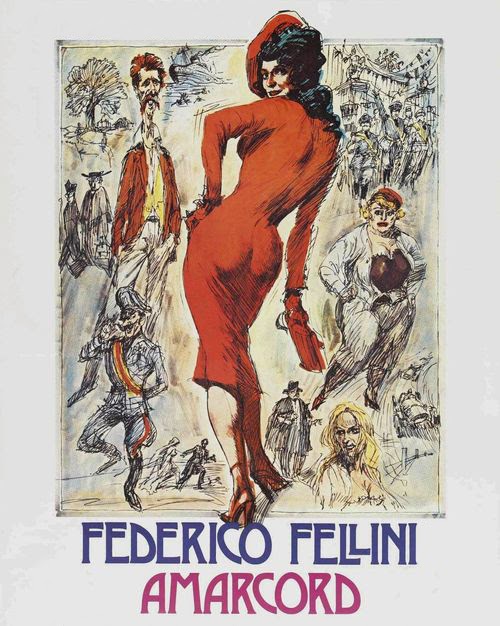
Amarcord sure is a fun ride! There is no main character (so to speak), there is no overarching plot; it is simply a window to the village of Borgo San Giuliano, in pre-WWII Italy, that stays open for a year, from spring to spring. We get to spend two hours simply watching its picturesque inhabitants interact with each other, and, if that sounds dull, then you probably have never watched a movie by Federico Fellini ... As I usually do, I had no idea what to expect when I set myself to watch Amarcord: I had never read anything about the movie or seen any stills from it, so as to free myself from any bias or preconceived ideas. What I found was one of the most enjoyable movies I have ever watched! Everything feels so natural, so effortless, that most of the time it seems the actors are just improvising their lines. The sad thing is, the Blu-ray version available in Japan has no extras whatsoever... I would have loved to watch any behind-the-scenes footage, to confirm (or refute...