Posts

Moolaadé (2004)

Image
It was in 1954 that  François Truffaut  published his Une certaine tendance du cinéma français  in the influential film magazine  Cahiers du Cinéma , which was followed by  André Bazin 's  De la politique des auteurs  a year later, key essays among several in which their contemporary French cinema was being criticized in that periodical for producing "soulless", commercial films, put together by directors who were satisfied in being mere  metteurs-en-sc ène  (stage-setters) instead of true  auteurs , due to their shooting movies without imprinting any personal style to their work. Despite actually being a reaction to the way French government allocated funds for film financing, prioritizing directors with a track record of box office hits in detriment of newcomers, the idea that a film is the reflection of the creative vision of its director would be formalized by Andrew Sarris in his 1962 essay  Notes on the Auteur Theory...

Strangers on a Train (1951)

Image
In a 1973 interview , when asked what was the thing that frightened him the most,  Alfred Hitchcock  replied he was "scared stiff of anything having to do with the law". The slightest idea of being accused of a crime he didn't commit and all the implications that would come of it, he said, were enough to send a chill down his spine. His fear was, he himself   admitted , rooted in an episode of his childhood, in which he was locked in a prison cell by the local constable at his father's request, as a punishment for having been naughty. This "unjust incarceration" would come to play a big role in his life, whose entire filmography can be seen as a means of coming to terms with that experience: in virtually all his movies, innocent people are discredited and/or wrongly accused, being thus put in a position where they have to prove their innocence to authority figures too obtuse to track the real culprit themselves. Believing suspense to be not a ...

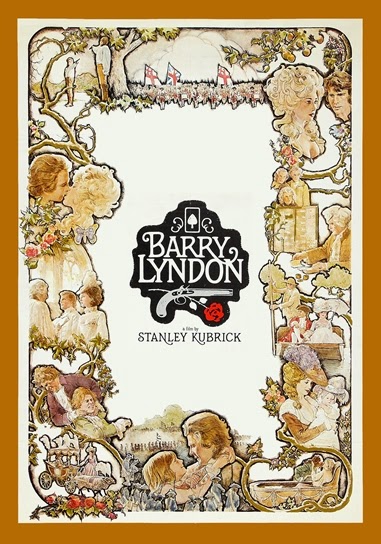
Barry Lyndon (1975)

Image
It is no secret that, by the second half of the 1960s, director  Stanley Kubrick  took a deep interest in making a biography of  Napoleon Bonaparte , going to  inhumane levels of effort  during pre-production to ensure he could perfectly recreate the atmosphere of 18th century Europe. Unfortunately, by that time, as the post World War II baby boomers  started reaching adulthood, a counterculture was created that centered around values like contemporary relevance and a revisionist attitude toward history, in a rebellion against the way the older generation saw the world. Correspondingly, general interest in period dramas, up to then extremely popular, had started to decline. As a result, Kubrick's producers, already apprehensive due to his gigantic budget estimations given the unfavorable cultural context, finally decided to abandon the project altogether once  Sergey Bondarchuk 's thematically similar  Waterloo  (1970) turned out to be a ...

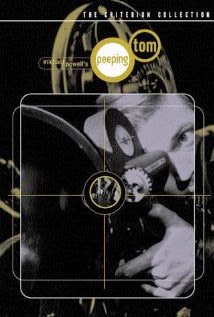
Peeping Tom (1960)

Image
In this day and age, in a society so numb to violence, it is hard to imagine a time when people used to be scared by  Vincent Price  movies. Back then, it was commonplace for horror films to revolve around either the classic monsters (Frankenstein, Dracula and so on), or the fears of the  Atomic Era  (such as aliens, giant mutations resulting from radioactivity, and failed scientific experiments with catastrophic results). Although the  Hammer  films, with their graphic violence, were pushing the boundaries of what could be shown onscreen, the horror element itself was still quite detached from reality, be it in some Gothic castle in the past or in the laboratory of a crazy scientist in the near future. It was not until 1960, with  Michael Powell 's  Peeping Tom  and  Alfred Hitchcock 's  Psycho , that horror was brought to the real world, to the present-day society: far away from the literal monsters from before, embodying pure ...

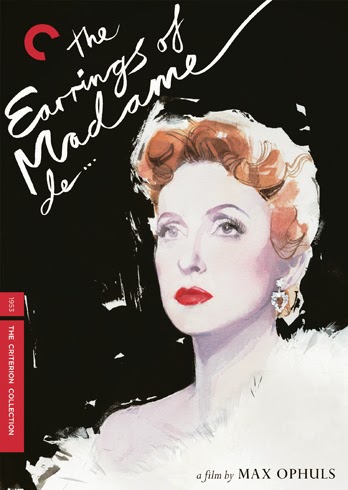
The Earrings of Madame de... (1953)

Image
If someone asked me what was, in my opinion, one of the most damaging things to have ever happened to the movie industry, I would have replied, with no margin for doubt, the creation of the  Hays Code  in the US, in 1930, which laid out rules to which movies had to abide in order to be deemed "acceptable". In any other point in history, this code would have been quickly dismissed as the Puritan daydream it was; right after the Great Depression, however, movie executives were much more inclined to accept it, fearing boycotts to all "unacceptable" movies organized by e.g. the National Legion of Decency . As a result, during the 30 years that followed, movies in the US were required to uphold the sanctity of marriage, the rightness of the law and the sanctity of religion, aiming thus at "rebuilding human beings exhausted with the realities of life". There was no crime without punishment, nor a good deed without reward, and anything that could be construe...